Jeff Koons: ‘Venus’ Lespugue
EXHIBITION
UNTIL AUGUST 31, 2026
THE EXHIBITION
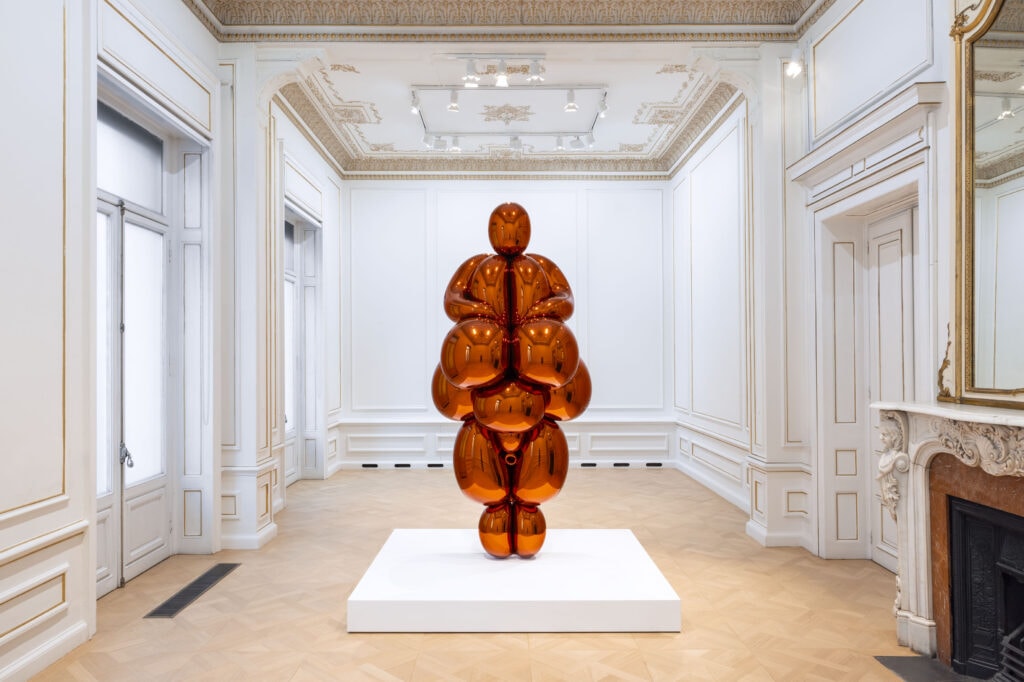
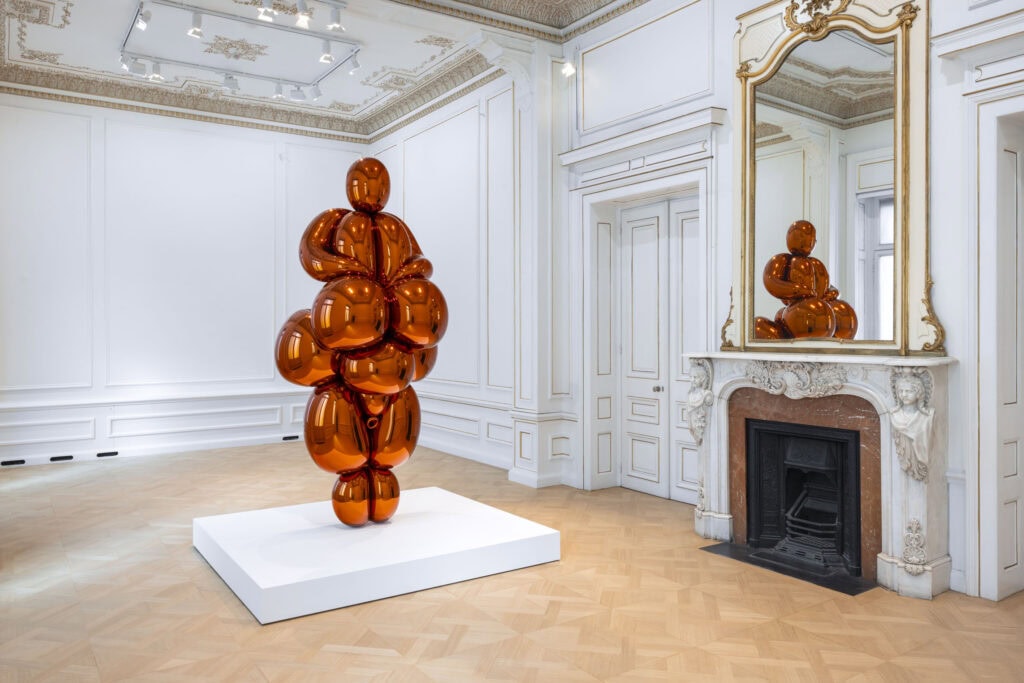
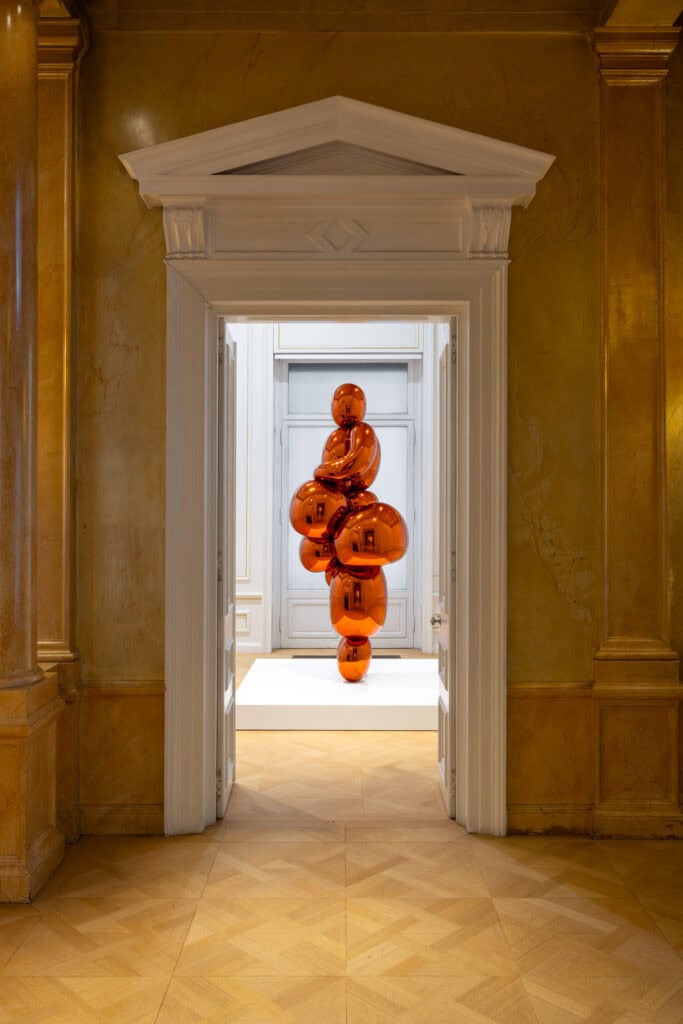
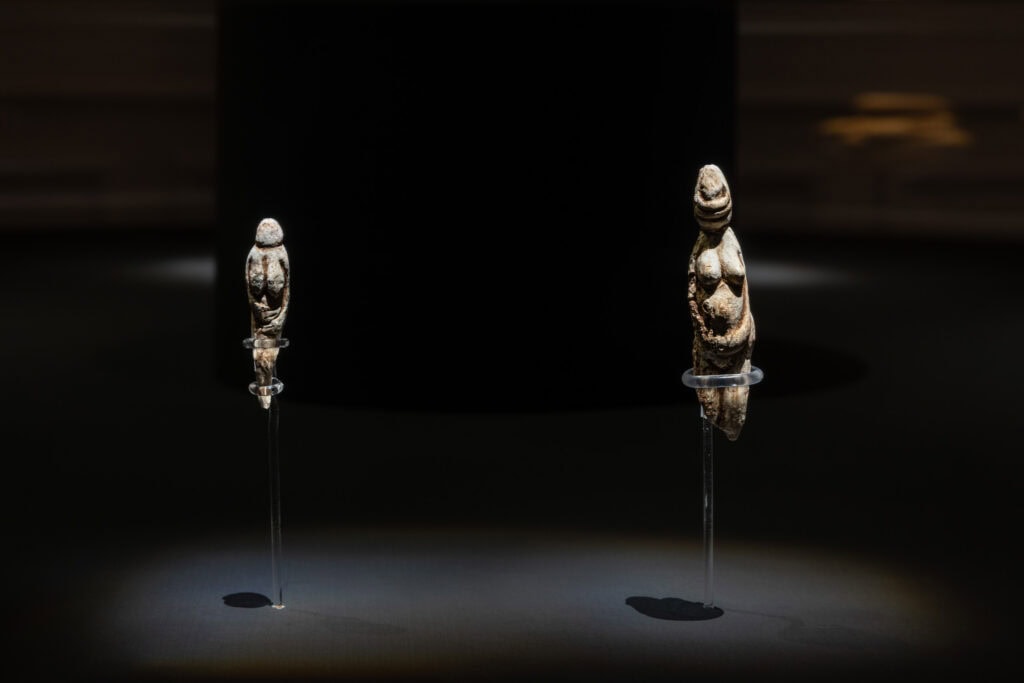
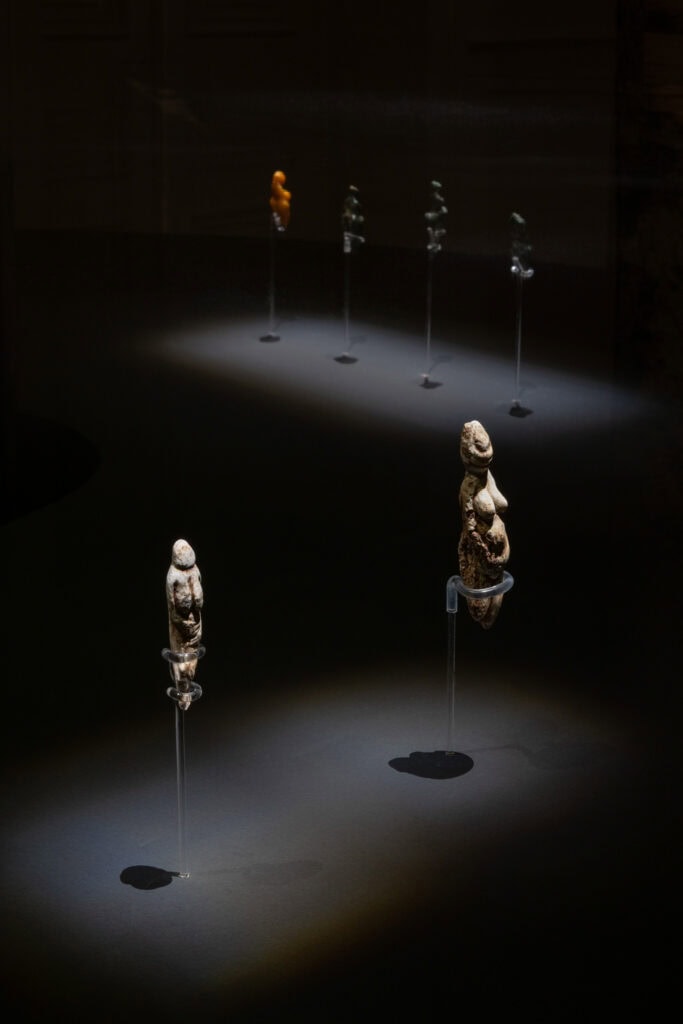
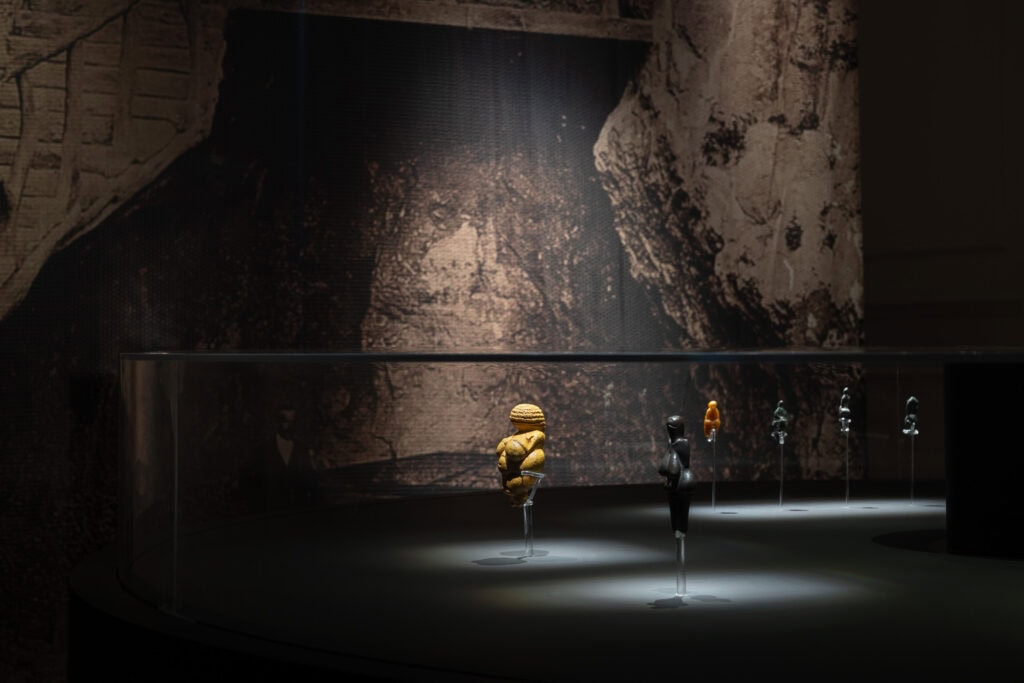
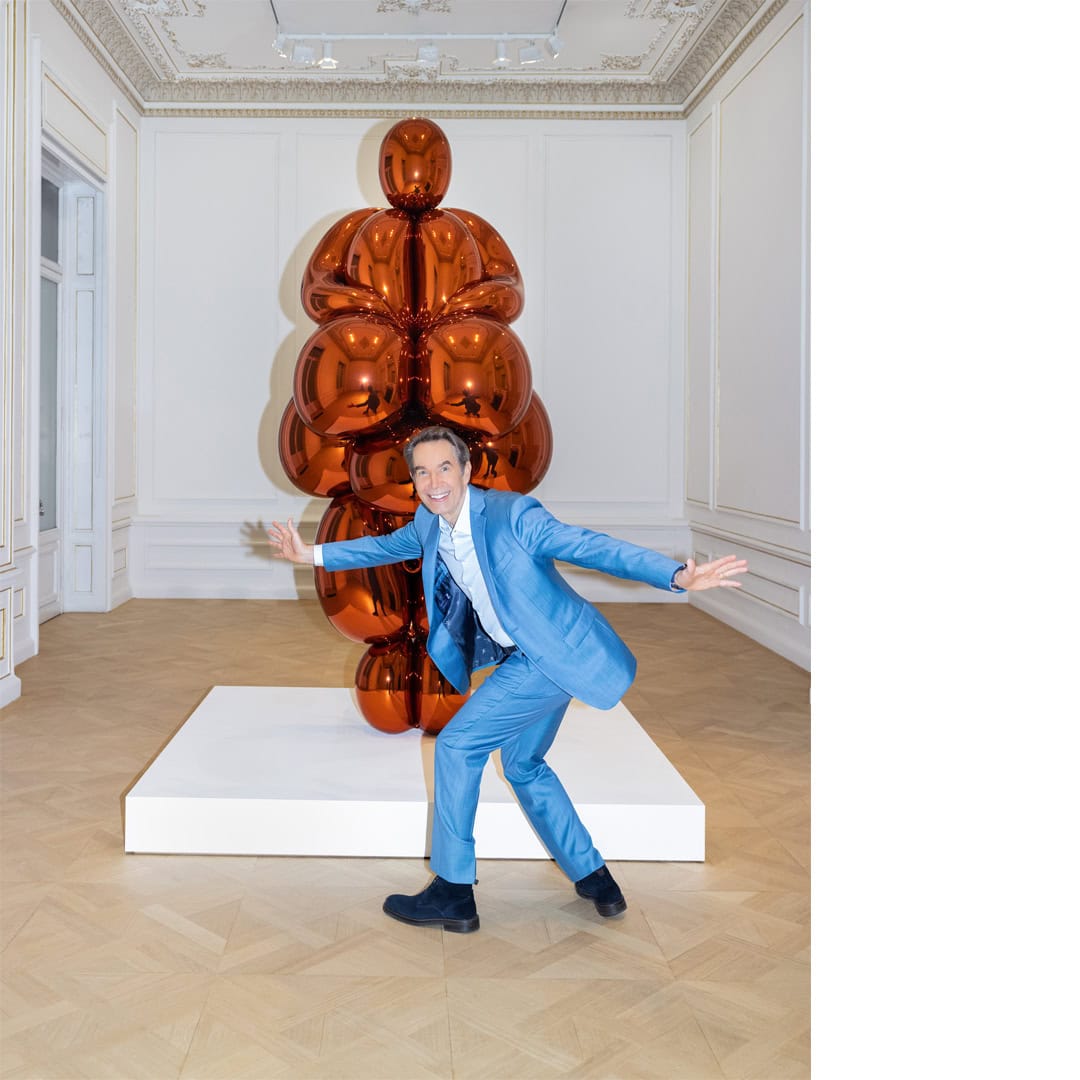
The Museum of Cycladic Art presents, the exhibition “Jeff Koons: ‘Venus’ Lespugue”, a unique curatorial project that brings Paleolithic art into dialogue with contemporary art. Exploring the significance of the Venus figure from the Paleolithic period to the present day the Museum presents Balloon Venus Lespugue (Orange) (2013-2019) of the international acclaimed artist Jeff Koons, loaned from the Homem Sonnabend Collection of Antonio Homem Sonnabend and Phokion Potamianos Homem, marking the first public display of the artwork, in dialogue with ten Paleolithic “Venus” figurines, through certified copies of the immovable originals housed in major European museums. The exhibition explores the female form from the Paleolithic era to contemporary art, proposing a dialogue that spans more than 40,000 years of human creativity.
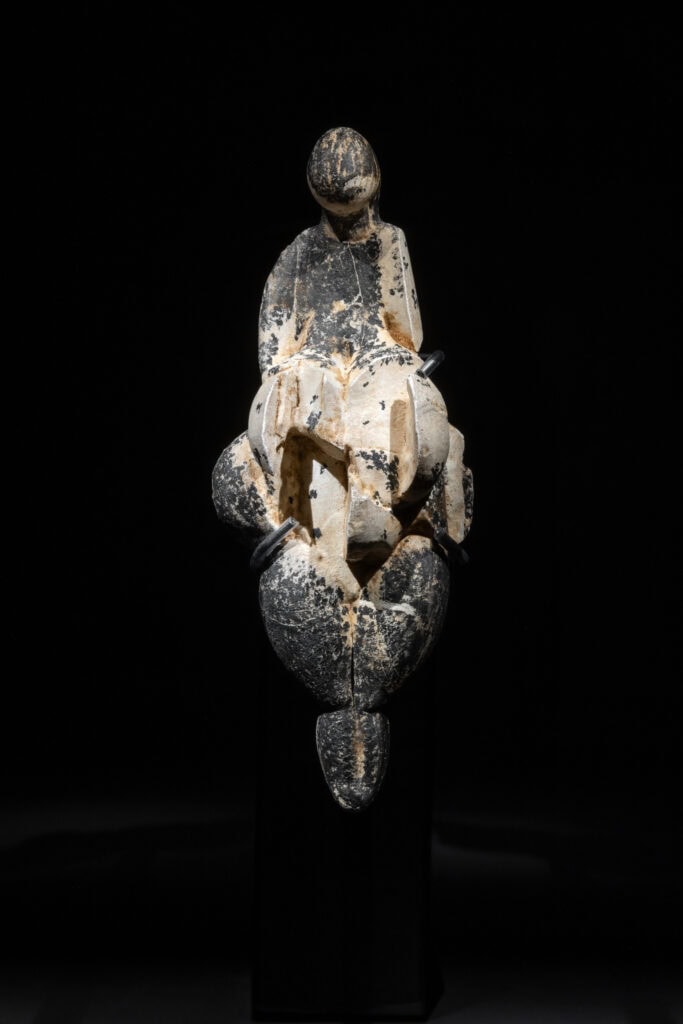
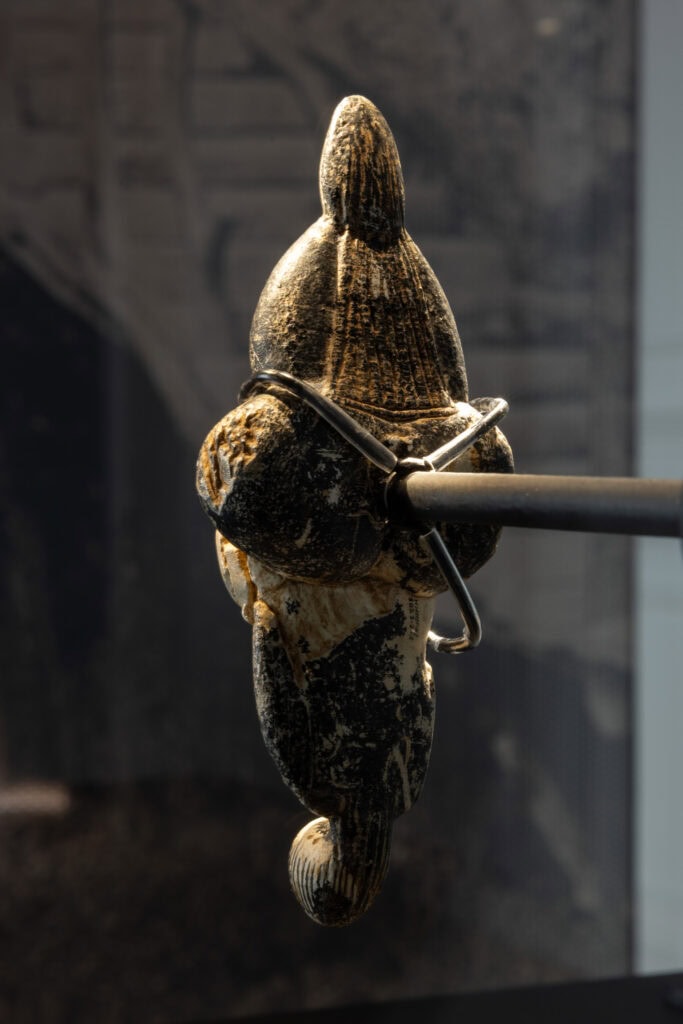
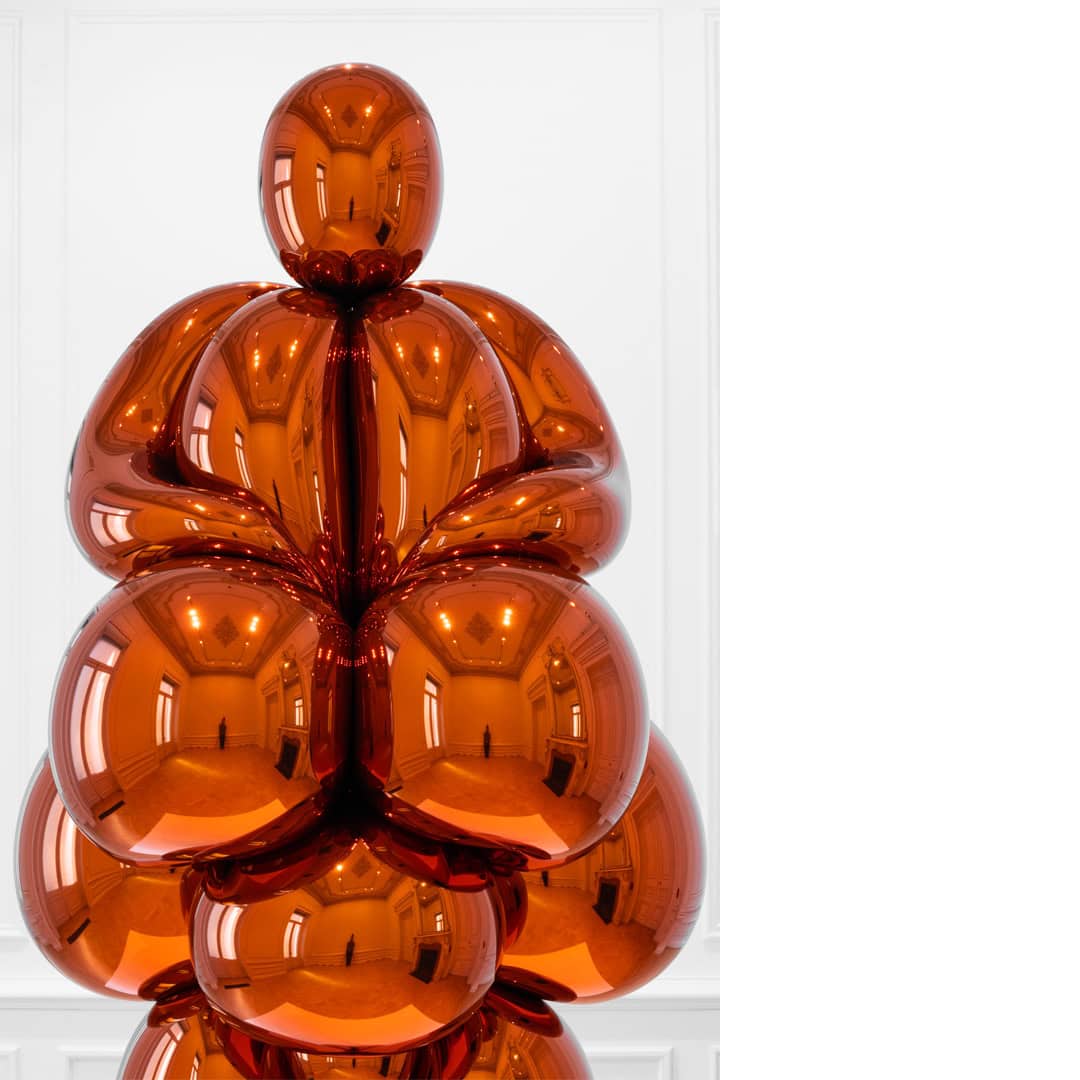
Koons’ Balloon Venus Lespugue (Orange) draws inspiration from the paleolithic “Venus of Lespugue”, a mammoth tusk ivory figurine that dates back approximately 28,000 years. Jeff Koons has been influenced by this figure since the late 1970s. In his series Antiquity, which he started in 2008, the artist’s interpretation of the “Venus of Lespugue” engages a variety of art historical reference points, from Botticelli and Titian to Duchamp and Brancusi, where the notions of beauty and form play a central role. Koons has transposed the fetishized original, renowned for its exaggerated curves, into a towering balloon sculpture of Giacometti-esque proportions.
The exhibition does not suggest a linear history of art. Instead, it is organized as a dialogue of forms and ideas that transcends the boundaries of time, exploring the following questions: How has the symbolic body evolved from the Paleolithic period to postmodernity? Is there a universal archetype of fertility and femininity that transcends epochs? How does material transformation (from mammoth ivory and limestone to mirror-finished stainless steel) alter or preserve the symbolic meaning?
INFO
Duration
Venue
Museum of Cycladic Art
Tickets
Reduced: 7€
Cycladic Friends: Free
COMBO*
General admission: 16€
Reduced: 10€
Cycladic Friends: Free
*Includes entry to the permanent exhibitions
Guided Tours
Every Monday at 12:00 (from 4/5/2026 – 31/8/2026)
Guided tour ticket: 20€
Reduced: 14€
{GR}
Date and time:
2/4, 19:00
14/5, 19:00
11/6, 19:00
2/7, 19:00
6/8, 19:00
Guided tour ticket: 14€
Reduced: 11€
The guided tour ticket is available only online
Family Tours*
Sunday 24/5, 12:30-13:30
Sunday 21/6, 12:30-13:30
Tickets: 20€
(for 2 adults and 1 child or 1 adult and 2 children)
Ages: 8 – 12 years old
*Family Tours will be held in Greek
Guided Talks*
Speaker: Paris Mexis
Admission ticket: €16
Reduced: €13
The Guided Talks will be held in Greek .
IMAGES
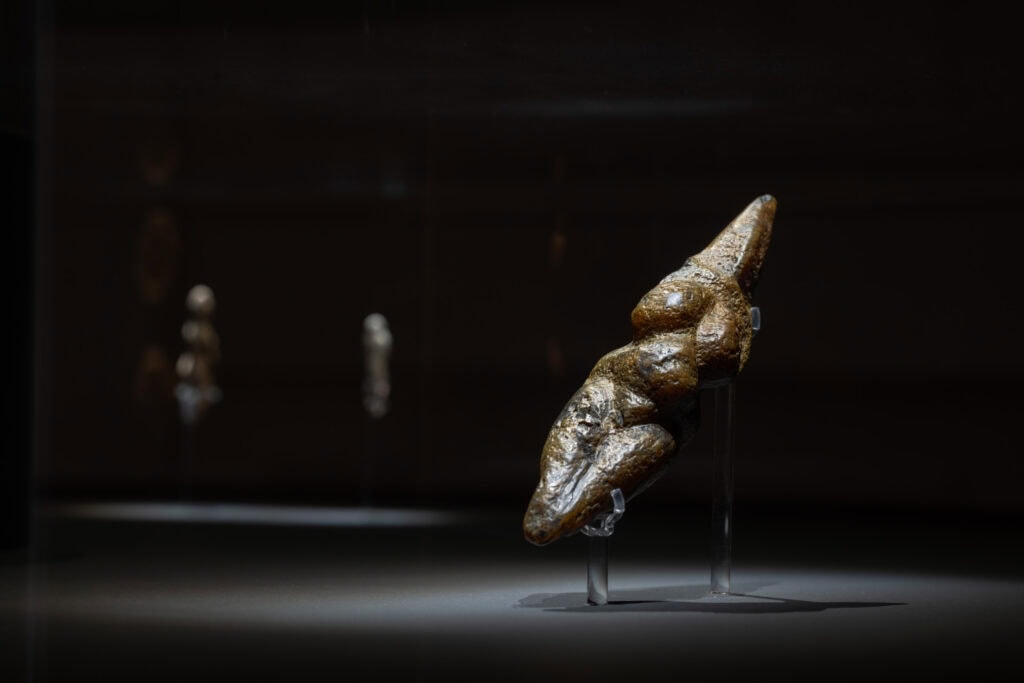
A JOURNEY ACROSS EURASIA SPANNING 40,000 YEARS
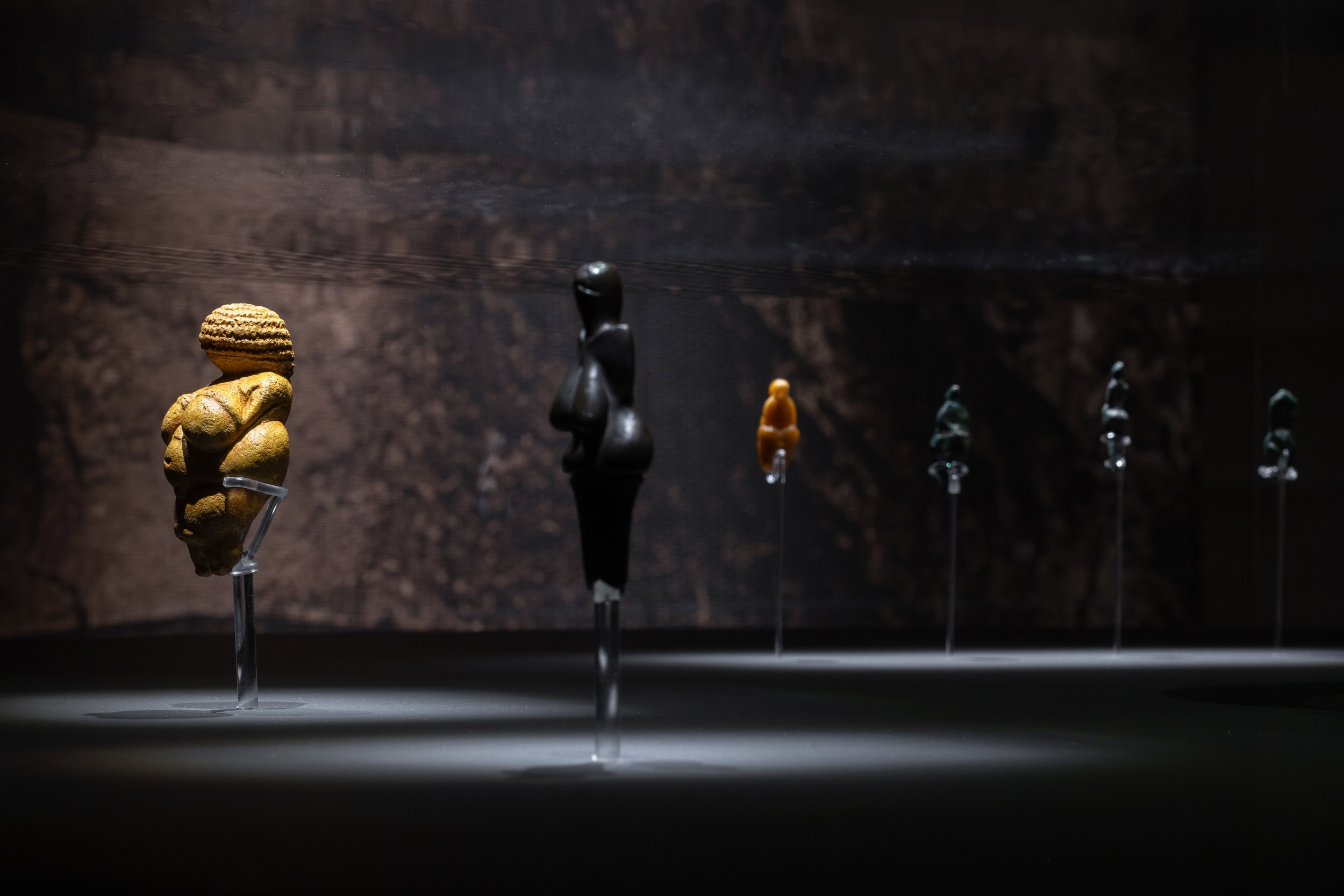
The exhibition narrative begins in deep prehistory.
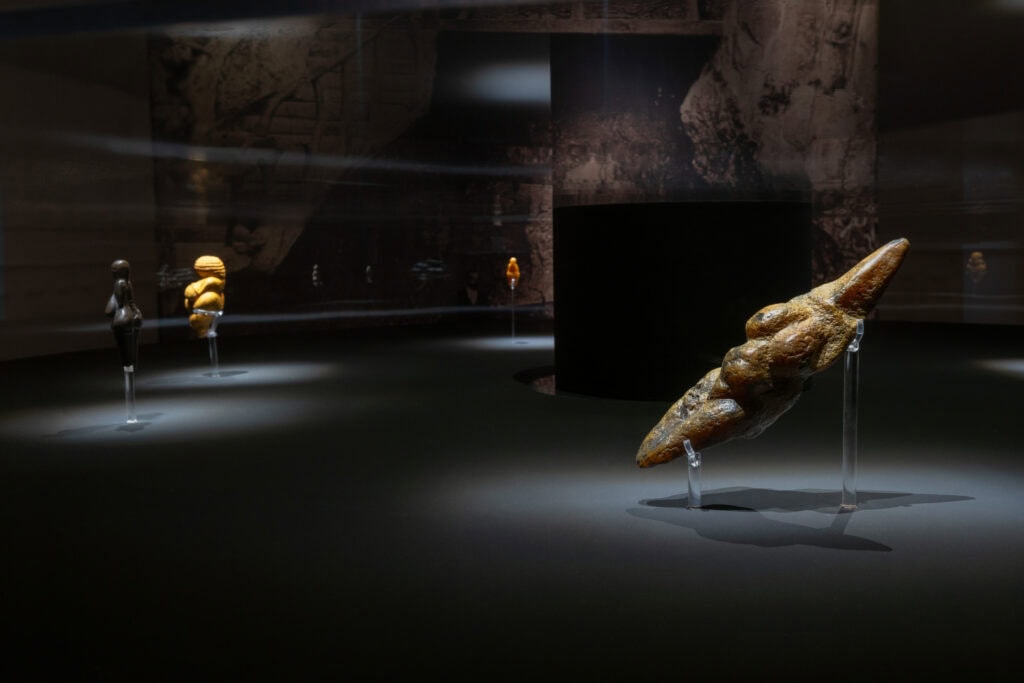
Between approximately 42,000 and 20,000 years ago, Paleolithic communities across Eurasia – from the Iberian Peninsula to Central Europe and Central Asia – created small female figurines in ivory, limestone, and clay. Today known as Paleolithic “Venuses,” these objects represent some of the earliest surviving examples of sculptural representation in human history.
Except for “Venus of Lespugue” from the Muséum Νational d’Histoire Νaturelle in Paris, the exhibition brings together a constellation of nine such figures, revealing a shared visual vocabulary that appears across great geographical distances.
For these “Venuses”, the Museum collaborated with the following institutions: Moravské zemské museum (Moravian Museum), Brno, Czech Republic; Musée d’Archéologie nationale, Saint-Germain-en-Laye, France; Museo Archeologico Nazionale di Taranto (MArTA), Italy; Museo delle Civiltà, Rome, Italy; Muséum national d’histoire naturelle, Musée de l’Homme, Paris, France; and Naturhistorisches Museum Wien, Vienna, Austria.
The journey begins with the “Venus of Lespugue”, discovered in the Rideaux Cave in southern France and carved from mammoth ivory. Its exaggerated abdomen, pronounced hips, and prominent breasts embody a formal language emphasizing fertility, corporeality, and the generative force of the body. Nearby appear the “Venuses of Grimaldi”, discovered in the Balzi Rossi caves on the Franco-Italian border, which offer a more elongated interpretation of the female form.
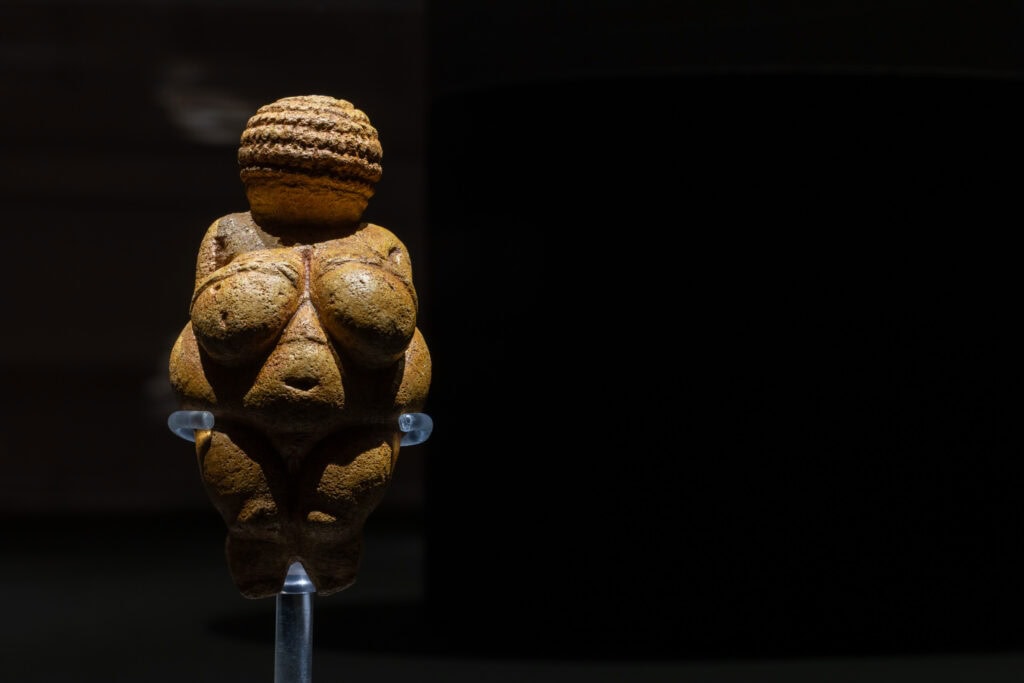
From Italy also comes the “Venus of Savignano”, a striking stone sculpture whose abstraction lends it a powerful sculptural presence, while Central Europe is represented by the “Venus of Dolní Věstonice”, among the earliest known ceramic sculptures in human history. The journey continues with the celebrated “Venus of Willendorf” from Austria – one of the most recognizable icons of prehistoric art – and concludes with the two “Venuses of Parabita” from southern Italy.
Despite the distances separating their places of discovery, these figurines share notable characteristics: small scale, pronounced emphasis on reproductive features, and a striking degree of abstraction in the rendering of the face and limbs.
Curators & Academic Directors of the Museum of Cycladic Art
CONTEMPORARY REINTERPRETATION OF VENUS
Ιn the exhibition, “Venus” figurines represent one of humanity’s earliest aesthetic codes. At the end of this journey into the prehistoric world, the work of Jeff Koons appears. Koons’ “Venus” revisits this prehistoric visual language through a radically different medium and context: the industrial, hyper-material world of the 21st century.
Through the reflective surface of Balloon Venus Lespugue (Orange), visitors are invited to explore how material transformation alters or preserves symbolic meaning, and how contemporary art might help us reconnect to ancient aspects of human experience. Balloon Venus Lespugue (Orange) translates the small Paleolithic figure into a monumental sculptural presence made of reflective stainless-steel. Its polished surface mirrors the surrounding space and the viewer, turning the act of seeing into an active participatory experience.
The exhibition also includes original sketches by Jeff Koons for the creation of the Balloon Venus Lespugue series, as well as a short video produced by the Museum of Cycladic Art in which the artist discusses his work.
The exhibition is accompanied by a scholarly catalogue featuring essays by Jeff Koons and leading international researchers on Paleolithic figurines and their enduring relevance in the history of art.
AUDIO GUIDE
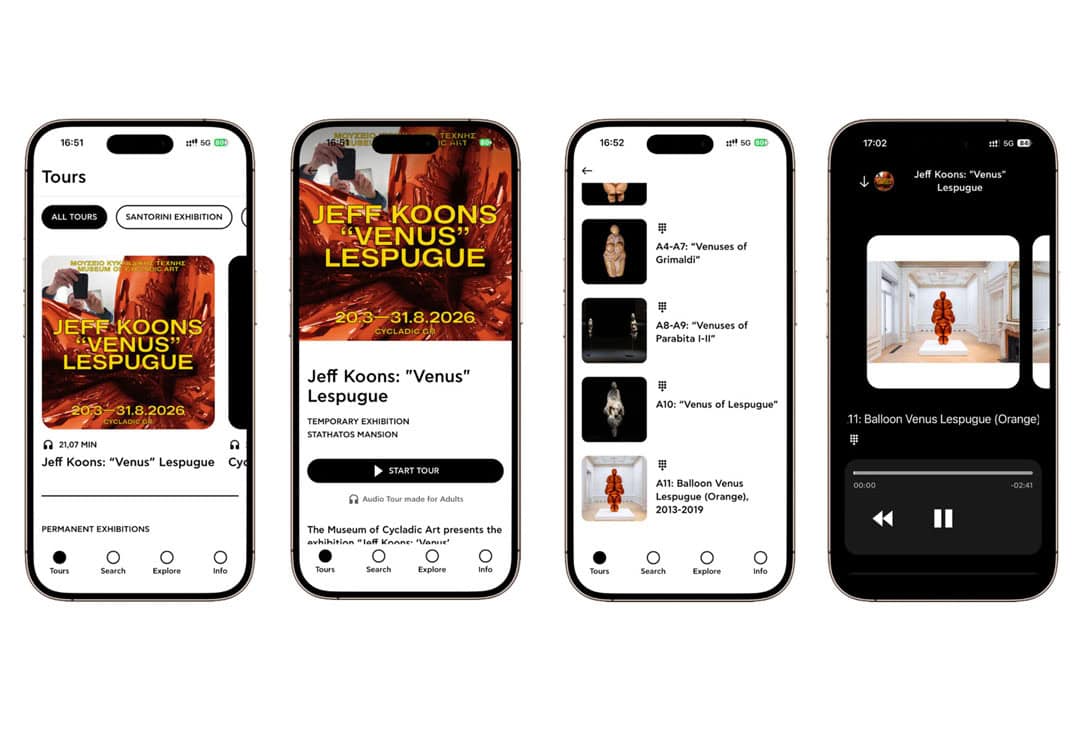
Get the most out of your visit by exploring our exhibition “Marlene Dumas: Cycladic Blues” through the audio guide available in the Museum’s mobile app.
Download the app free of charge before or during your visit. The audio guide tour is available in Greek and English.
*Tip: For a better experience bring your headphones with you during your visit.


ABOUT JEFF KOONS
One of the most recognizable of contemporary artists, Jeff Koons (b. 1955, York, Pennsylvania) is known for challenging the boundaries of art. He transforms everyday images and objects into works that engage the viewer in a dialogue between the modern era and the past. Since his first solo exhibition in 1980, his work has been displayed in museums and cultural institutions around the world, including the Museum of Modern Art (New York), the Tate Gallery (London), the Whitney Museum of American Art (New York), Centre Pompidou (Paris), and Guggenheim Bilbao (Bilbao).
Jeff Koons is widely known for his iconic sculptures Rabbit and Balloon Dog as well as his monumental floral works Puppy and Split-Rocker. Working with everyday objects, his work revolves around themes of self-acceptance and transcendence.
Koons lives and works in New York City.
About the Homem Sonnabend Collection
The Homem Sonnabend Collection constitutes the private holdings of Antonio Homem Sonnabend and Phokion Potamianos Homem. The collection embraces works of the Renaissance in dialogue with significant examples of African and Oceanic art, and early 20th century decorative arts, while also foregrounding seminal figures of postwar and contemporary practice—from Pop Art to Arte Povera—as well as works dating from the 1980s and 1990s.
Encompassing a wide range of media, including photography, sculpture, and painting, the collection brings together works by artists such as Andy Warhol, Cy Twombly, Roy Lichtenstein, Jasper Johns, Robert Rauschenberg, Claes Oldenburg, Michelangelo Pistoletto, Mario Schifano, Lucio Fontana, Jannis Kounellis, Bernd and Hilla Becher, Hiroshi Sugimoto, and Jeff Koons, among others.
EXHIBITION CATALOGUE
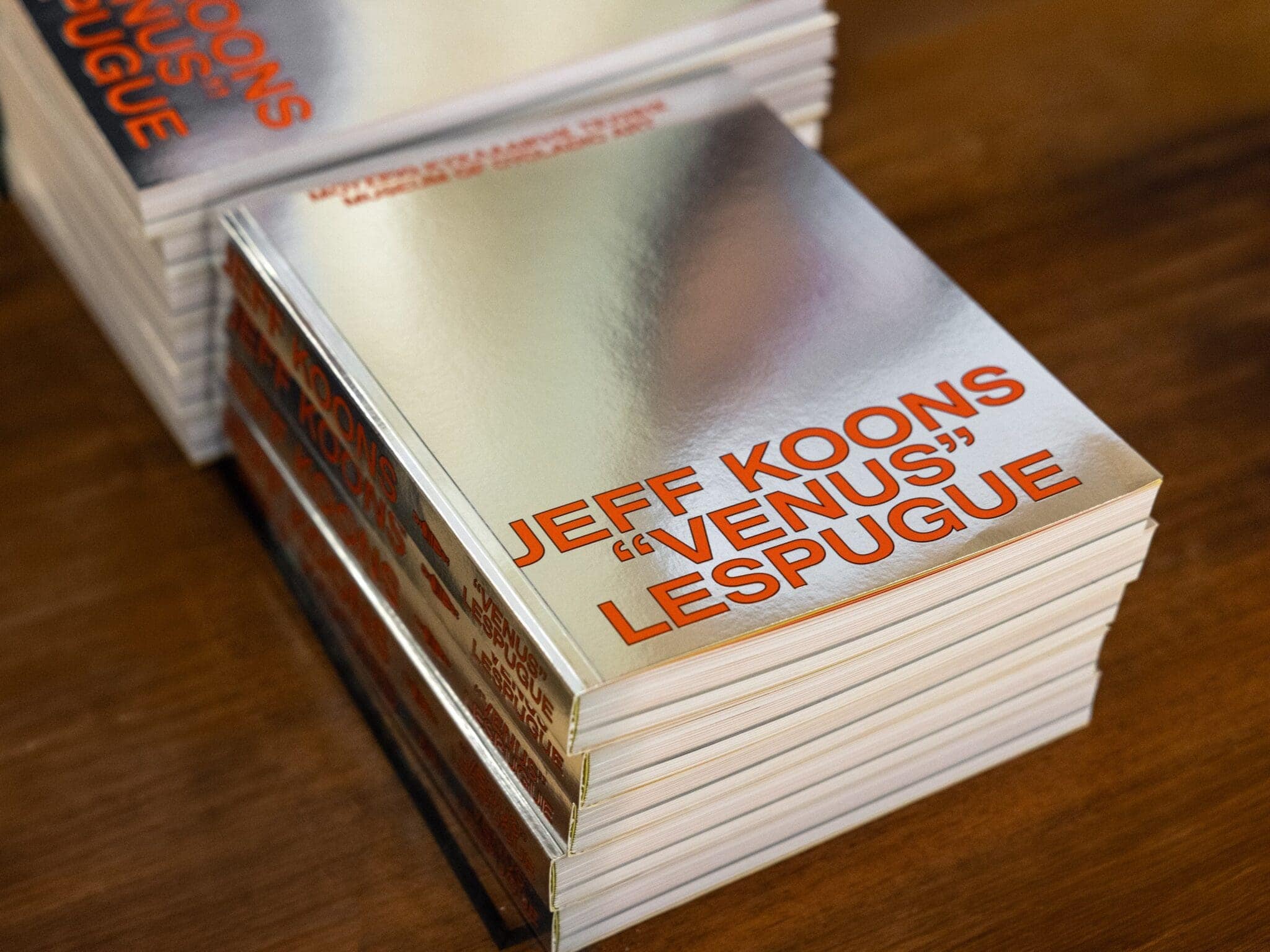
Bilingual catalogue published on the occasion of the exhibition “Jeff Koons: ‘Venus’ Lespugue”, focusing on Koons’ Balloon Venus Lespugue (Orange), 2013-2019.
The publication features essays by Jeff Koons and leading international researchers on Paleolithic figurines –source of inspiration for Koons’ monumental sculpture– and their enduring relevance in the history of art.
RELATED EVENTS
EVENTS
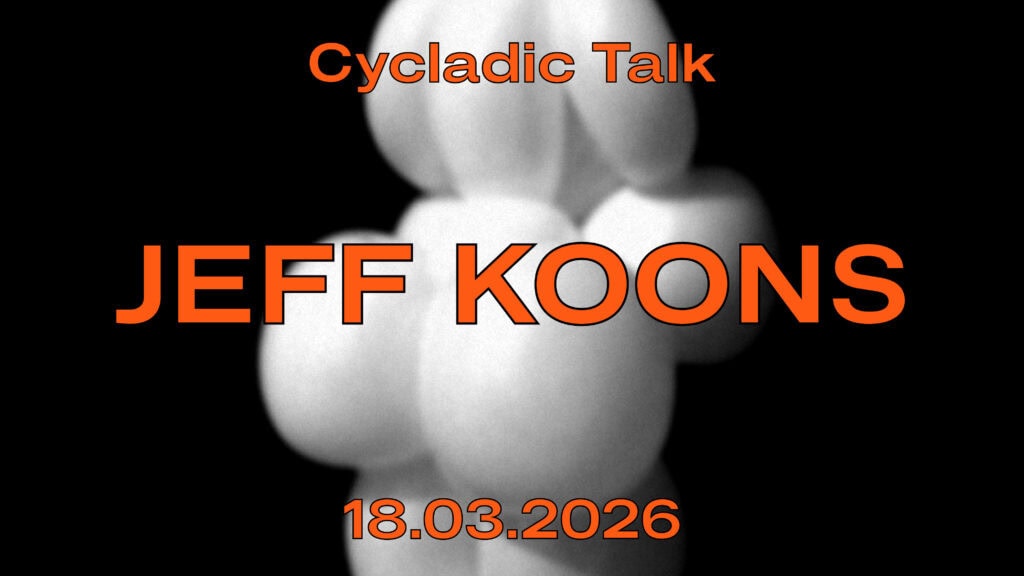
WEDNESDAY, MARCH 18, 19:00
Cycladic Talk – Jeff Koons
EVENTS
TEMPORARY EXHIBITION
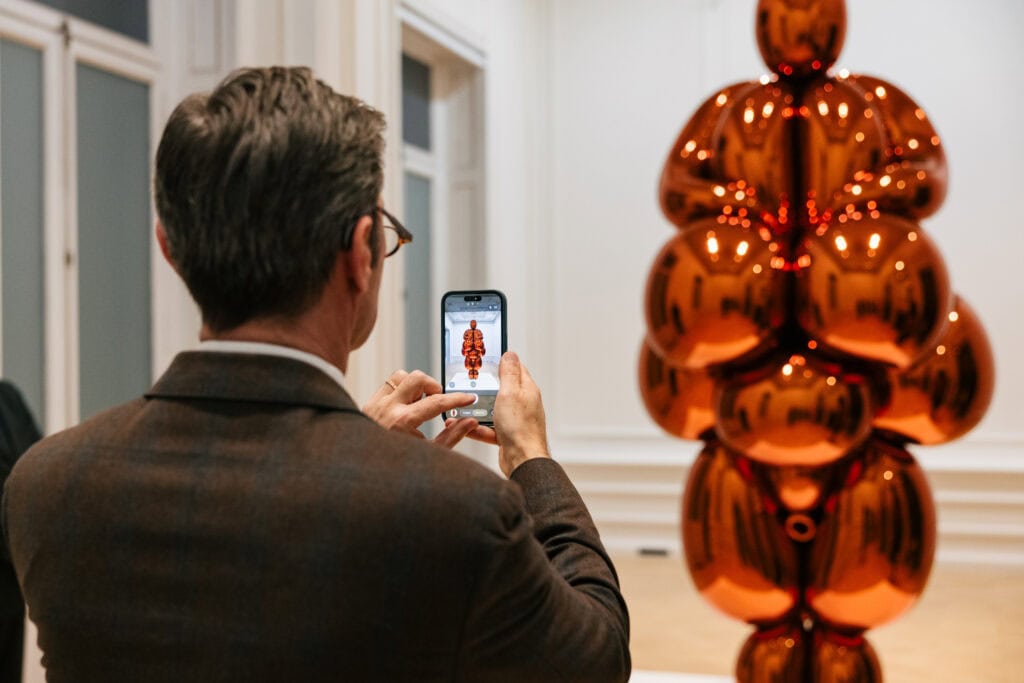
Guided Talks – Jeff Koons: “Venus” του Lespugue
CYCLADIC FRIENDS
BE
FRIENDS
Cover Photo
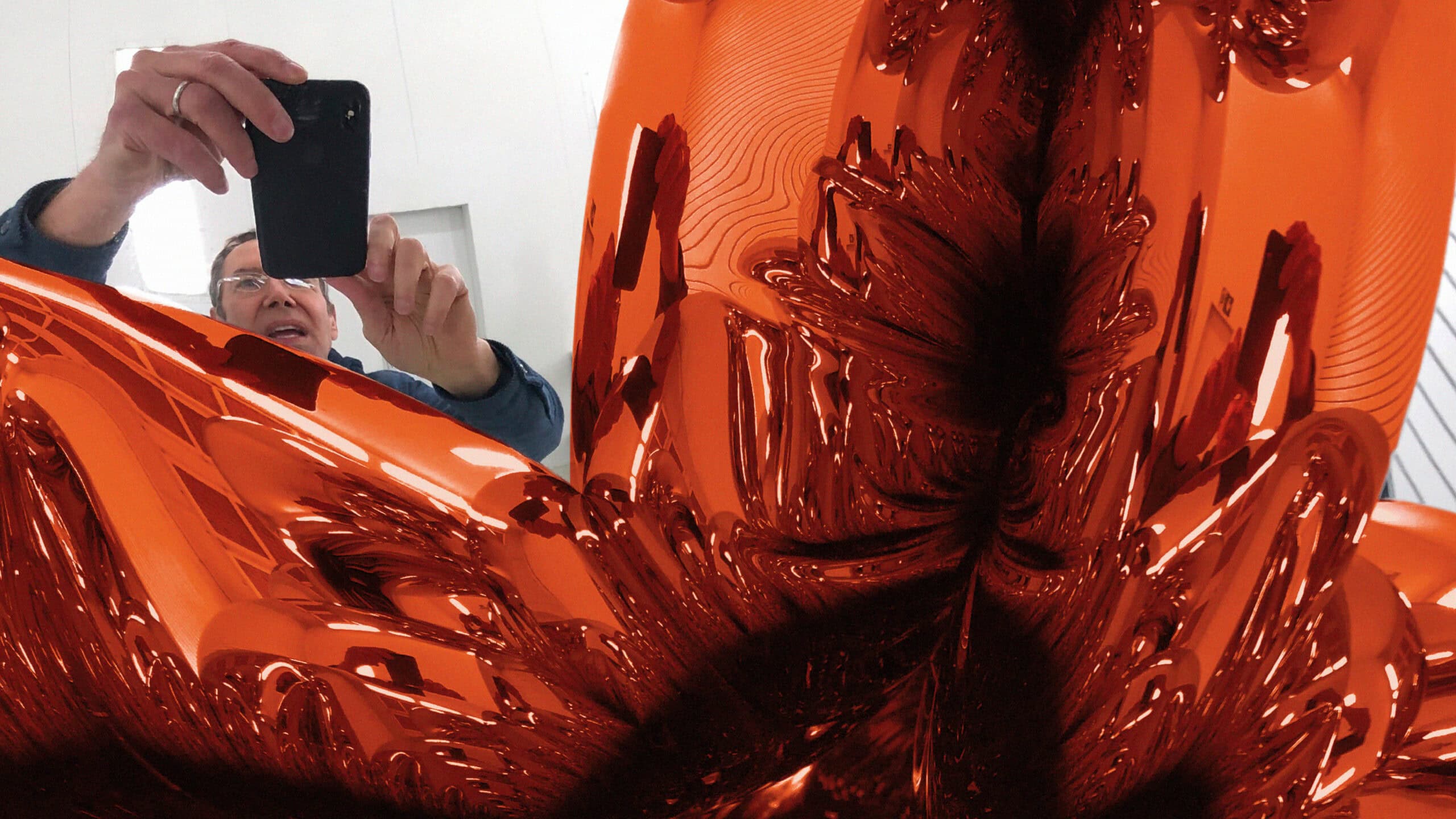
Jeff Koons with Balloon Venus Lespugue (Orange) in production, 2019
© Jeff Koons