The Corpus of “Cycladic Figurines and Stone Vessels”:
A Groundbreaking Initiative
EVENTS
FEBRUARY 4 & 5, 2026
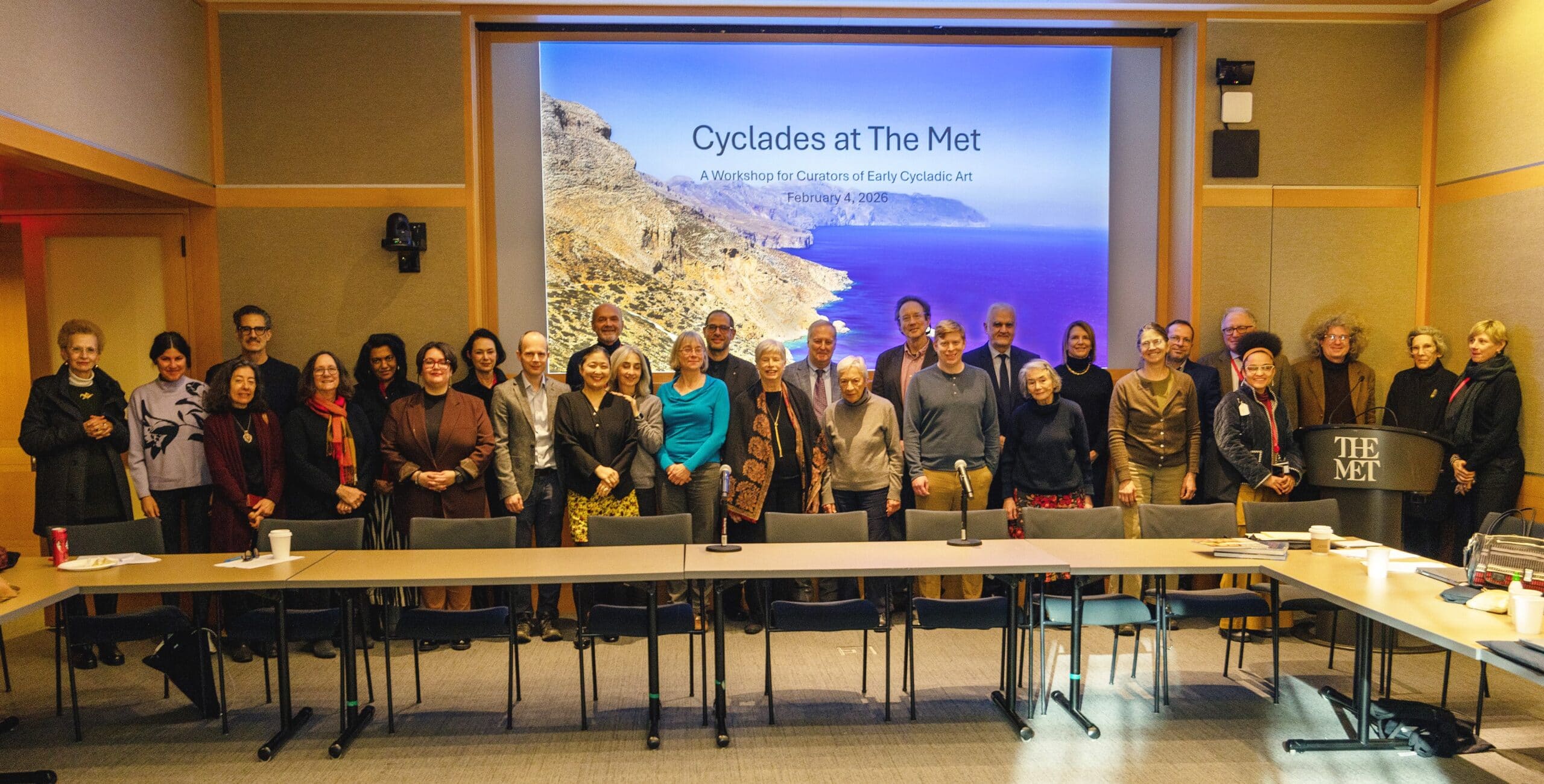
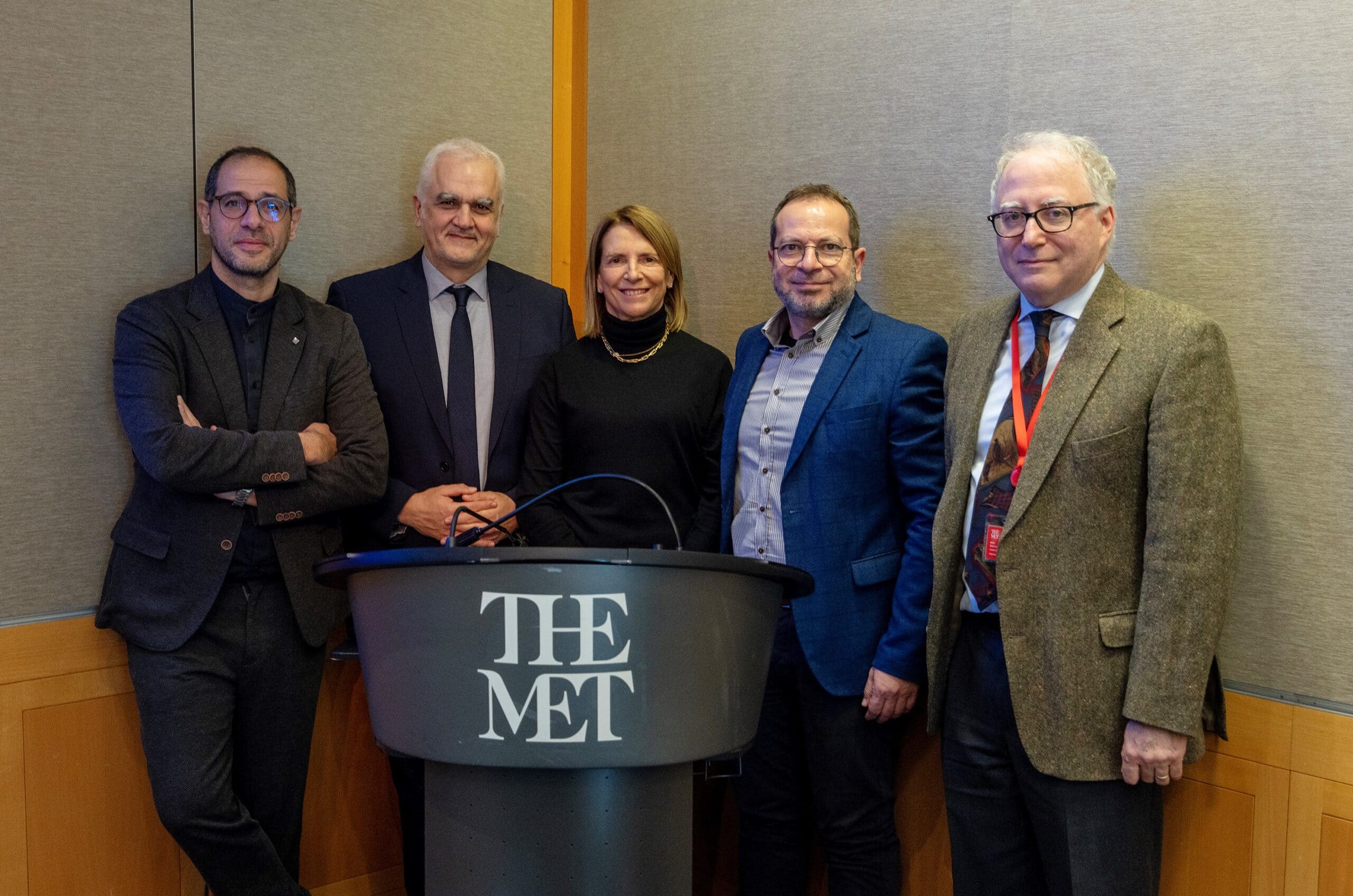
On February 4 and 5, 2026, a historic workshop took place at the Metropolitan Museum of Art in New York.
The Museum of Cycladic Art was represented at the highest level, as its President and CEO, Sandra Marinopoulou, opened the series of speeches by announcing the creation of a pioneering “Corpus of Cycladic Figurines and Stone Vessels,” the result of the historic Memorandum of Cooperation between the Museum of Cycladic Art and the Ministry of Culture under the initiative of Minister of Culture Dr Lina Mendoni. This collaboration reflects a strategic decision: to recover, study, and make accessible the dispersed Cycladic heritage.
Subsequently, the Museum’s Academic Directors, Professors Panagiotis Iossif and Ioannis Fappas, together with the Director of the Ephorate of Antiquities of the Cyclades, Dr. Demetrios Athanasoulis, presented in detail the methodological, digital, and operational framework for the creation of the Corpus, and also participated in the discussions that followed. University professors and researchers, as well as curators from some of the most important museums in the world, gathered to discuss best practices in the creation of archaeological databases and the future of research on Cycladic art of the 3rd millennium BC. This meeting, organized by the MET, demonstrated that the academic community fully supports this initiative and is ready to contribute to its development, while the rich discussions following the presentations showed the willingness of specialists to address sensitive issues of authenticity and provenance in the most candid manner.
What is the Corpus? The Corpus is an open-access digital database that aggregates Cycladic figurines and stone vessels from museums and private collections worldwide. Rather than a simple catalogue, it functions as a dynamic research infrastructure that enables scholars to develop a deeper understanding of one of the most significant civilizations of the Bronze Age. The database serves as an invaluable resource for investigating Cycladic cultural production and artistic practice.
How is it structured and organized? Each artifact is catalogued comprehensively, encompassing material composition, dimensional measurements, decorative programs, preservation conditions, and even traces of ancient pigmentation imperceptible to the naked eye. Hands of artisans and technical approaches are identified and taxonomically attributed to either individual “masters” or to regional workshops, enabling precise artifact attribution.
Who are the participants? This initiative represents a historic collaboration between the Hellenic Ministry of Culture and the Museum of Cycladic Art, facilitated through the participation of international specialists and institutions from the United States, United Kingdom, Germany, France, and Greece.
A Groundbreaking Initiative
Safeguarding Our Cultural Legacy
A LEGACY WITH GLOBAL SIGNIFICANCE

The Corpus is not intended to be a static, conventional catalogue. Rather, it aspires to become a dynamic and evolving database that will continue to expand by systematically integrating newly discovered artifacts from excavations as well as acquisitions from major museums and private collections. This project exemplifies how international cooperation, commitment to open knowledge, and dedication to Greek cultural heritage can transform our understanding of antiquity. In this regard, the Museum of Cycladic Art stands at the forefront of scholarly innovation.
The Corpus currently stands at a pivotal stage of development. An initial pilot phase has been completed with approximately 893 records, derived from three significant sources: the collection of the Museum of Cycladic Art, the Cycladic collections from the Louvre (Paris), and published material from the Keros Project. Technically, the existing database incorporates approximately fifty distinct data fields, systematically organized into rational categories that document every dimension of an artifact: from institutional provenance and typological classification to physical measurements, decorative patterns, and the capacity to recognize individual “masters”. Ultimately, the Corpus is anticipated to encompass approximately 10,000 records when fully completed and collections from excavations, museums, and private holdings have been incorporated. This substantial data volume will provide a robust research framework enabling scholars to conduct statistical analyses and comparative studies of Cycladic art on an unprecedented scale.